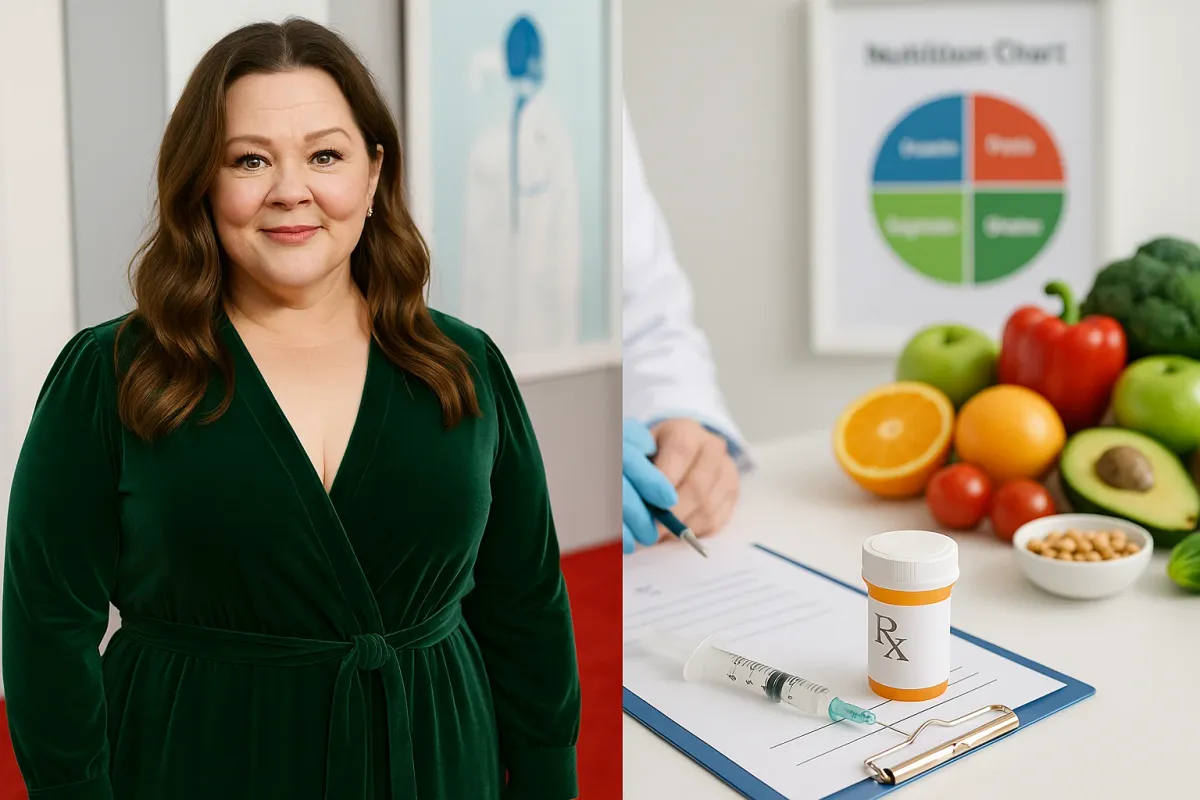
Melissa McCarthy’s recent 95‑pound weight loss and buzzed‑about “Saturday Night Live” appearance set off a familiar firestorm: Did she use Ozempic or other weight‑loss injections? Is it “cheating”? And what does her transformation say about how the rest of us should be thinking about food, health, and body image in 2025?
As celebrities from Oprah Winfrey to Elon Musk acknowledge (or are accused of) using GLP‑1 drugs like Ozempic, Wegovy, and Mounjaro, the conversation has shifted from quiet Hollywood whispers to mainstream dinner‑table debate. Barbra Streisand reportedly wondered publicly if McCarthy had used injections, echoing what millions asked while scrolling through social feeds: Is nutrition still relevant when “skinny shots” exist?
The short answer: nutrition matters now more than ever. Medications can change appetite; they do not replace the need to nourish a body that still has to think, move, repair, and age well. If you’re watching celebrity transformations and wondering what it means for your own plate, this guide breaks down how to think about food in the era of GLP‑1s—whether you’re on these medications, considering them, or avoiding them entirely.
Ozempic, Celebrities, and the New Reality of Weight Loss
GLP‑1 medications like semaglutide (Ozempic, Wegovy) and tirzepatide (Mounjaro, Zepbound) mimic gut hormones that slow stomach emptying and reduce hunger. They were developed for type 2 diabetes, but their impact on weight loss has been so significant that demand has surged, prompting ongoing media coverage, global shortages, and intense ethical debate.
When a high‑profile figure like Melissa McCarthy appears dramatically smaller, the public conversation often jumps straight to: “What drug?” rather than “What’s her health plan?” This is part of a wider cultural shift: weight is treated like a tech problem to be “hacked,” while the fundamentals—nutrition quality, muscle preservation, sleep, stress—get sidelined.
Clinically, this is dangerous. Research on GLP‑1s shows:
- People can lose substantial weight, but up to 30–40% of that loss can be lean mass (including muscle) if they are not eating and training wisely.
- Rapid weight loss can lower bone density, especially in women and older adults.
- When medications are stopped, a large proportion of weight is often regained, particularly if no nutrition or lifestyle foundations are in place.
This is where nutrition becomes non‑negotiable. Whether you’re taking a GLP‑1, using another medical approach, or focusing on lifestyle alone, what and how you eat strongly predicts whether you maintain muscle, energy, mood stability, and long‑term metabolic health.
Below are five evidence‑based nutrition strategies that matter in the “Ozempic era” of 2025—celebrity or not.
1. Treat Protein as a Non‑Negotiable, Not an Afterthought
Appetite‑suppressing drugs can make it surprisingly hard to eat enough, especially protein. But during any weight loss—natural or medication‑assisted—protein is the single most powerful macronutrient for protecting muscle, stabilizing blood sugar, and keeping you functional.
Why it matters now:
- Studies consistently show that higher protein intakes (about 1.6–2.2 g/kg of body weight per day for active adults) help preserve lean mass during calorie deficits.
- In trials of GLP‑1 medications, participants who didn’t prioritize protein lost more muscle and strength than those who did.
- Protein increases satiety and thermogenesis (calorie burn from digestion), supporting more sustainable weight management.
Practical targets:
- Most adults aiming for fat loss while preserving muscle do well with 20–35 g of protein per meal, distributed evenly across 3–4 eating occasions.
- If you’re on an appetite‑suppressing drug and can only manage small meals, this becomes more critical: make every bite count.
Evidence‑based protein priorities:
- Lean animal sources: eggs, Greek yogurt, skyr, cottage cheese, poultry, fish, lean red meat (if tolerated and balanced with overall diet quality).
- Plant sources: tofu, tempeh, edamame, lentils, chickpeas, beans, seitan, higher‑protein whole grains like quinoa and farro.
- Strategic supplements: whey, casein, or quality plant‑based protein powders can help you meet needs when your appetite is low or your schedule is hectic.
The litmus test: if your weight is dropping but you feel weaker, “flatter,” dizzy on standing, or less resilient in workouts, your protein is almost certainly too low, and your weight loss may be coming from the wrong tissues.
2. Make Fiber and Micronutrients Your Insurance Policy
Celebrity transformations often focus on inches and dress sizes; your body quietly cares about nutrients and gut health. If medication or aggressive dieting slashes your appetite, it’s easy to fall below your needs for fiber, vitamins, and minerals—without immediate, obvious symptoms.
Why this is critical in 2025:
- GLP‑1 medications slow gastric emptying, which can worsen constipation, nausea, and reflux when fiber, hydration, and movement are inadequate.
- Rapid weight loss and low intake raise the risk of micronutrient deficiencies, particularly iron, B12, folate, vitamin D, and calcium.
- Longitudinal data links high‑fiber, nutrient‑dense patterns (like the Mediterranean diet) with reduced risk of cardiovascular disease, type 2 diabetes, and some cancers—risks that don’t vanish just because the scale goes down.
Core fiber strategies:
Aim for at least 25 g/day (women) and 38 g/day (men), or about 14 g per 1,000 calories you consume. If your total calorie intake is lower due to medications, you’ll need to be more intentional.
Prioritize:
- Vegetables: especially leafy greens, crucifers (broccoli, cauliflower, Brussels sprouts), carrots, beets, peppers.
- Fruits: berries, apples, pears, oranges, kiwi—prioritize whole over juice.
- Whole grains: oats, barley, quinoa, brown rice, whole‑wheat or rye bread, intact grains over ultra‑processed cereals.
- Legumes: lentils, chickpeas, black beans, kidney beans, split peas—powerhouses of both fiber and plant protein.
- Nuts and seeds: chia, flax, walnuts, almonds, pistachios.
Micronutrient backstops:
- Consider a basic, third‑party–tested multivitamin/mineral if your intake is limited—especially on GLP‑1s or other appetite‑suppressing drugs.
- Work with your clinician to monitor vitamin D, iron, B12, and folate, particularly if you’re vegetarian/vegan or have heavy menstrual cycles, GI conditions, or prior bariatric surgery.
Think of fiber and micronutrients as the scaffolding that keeps your metabolic “house” from collapsing while you remodel your weight.
3. Build Meals Around Glycemic Stability, Not Just Calories
Social media often frames GLP‑1 medications as a simple “eat less” switch. Metabolically, it’s more complicated. Blood sugar swings, energy crashes, brain fog, and intense cravings can all persist—or worsen—if what you do eat is mostly refined carbs or ultra‑processed snack foods.
Whether you’re losing weight via medication, lifestyle changes, or both, your day‑to‑day metabolic stability depends heavily on how you build meals.
Evidence‑based meal structure:
Each meal should emphasize:
Protein anchor (see Section 1)
High‑fiber carbohydrates
Healthy fats
Colorful plants
In practice:
- Breakfast: Greek yogurt with berries, chia seeds, and oats; or eggs with sautéed spinach and whole‑grain toast; or tofu scramble with veggies and avocado.
- Lunch: Lentil or chicken salad with mixed greens, olive oil, and whole‑grain bread; or salmon with quinoa and roasted vegetables.
- Dinner: Stir‑fried tofu or shrimp with a large mix of vegetables over brown rice; or bean chili with a side of roasted root vegetables.
Why this structure works:
- Protein + fiber + fat slow digestion and smooth out post‑meal glucose spikes.
- Stable blood sugar reduces fatigue, irritability, and rebound cravings—a crucial factor if you’re already eating less.
- For people at risk of or living with type 2 diabetes, this pattern complements what GLP‑1 medications are doing pharmacologically by reducing glycemic volatility from the food side.
If you rely on medications to suppress appetite but build those fewer meals around refined carbs, sugary coffees, or ultra‑processed snacks, you may still hit your calorie target yet feel unwell, unfocused, and metabolically fragile. Weight loss with metabolic chaos is not a win.
4. Prioritize Muscle Preservation as Aggressively as You Pursue Weight Loss
One of the most under‑discussed risks of the current injection‑driven weight loss wave: we are shrinking not just fat, but muscle and bone. This has life‑long consequences for strength, mobility, fracture risk, and metabolic resilience.
Multiple trials of semaglutide and tirzepatide show that a meaningful fraction of weight loss is lean mass. Nutrition can’t fix this alone, but it’s a major lever—especially when combined with resistance training.
Nutrition strategies for muscle preservation:
- Hit your protein targets (Section 1), ideally evenly spaced across the day.
- Include leucine‑rich foods (dairy, eggs, meat, soy) that strongly stimulate muscle protein synthesis.
- After strength sessions, aim for 20–30 g of high‑quality protein within a few hours—no need for a “30‑minute anabolic window,” but don’t skip your post‑workout meal either.
- Avoid extremely low‑calorie intakes unless medically supervised; chronic severe restriction drives the body to burn muscle along with fat.
If you’re on GLP‑1s or another powerful appetite‑suppressing drug and notice you’re skipping meals, “forgetting to eat,” or routinely falling under 800–1,000 calories per day, that’s a red flag. It may look impressive on the scale now; it will look very different in your bone density scans and strength tests at 50, 60, or 70.
The new metric in 2025 should not be “How much weight did you lose?” but “How much muscle did you keep?”
5. Anchor Your Plan in Sustainability, Not Celebrity Timelines
Melissa McCarthy’s transformation is unfolding under bright studio lights, stylists, and a rolling media cycle. Your life is not a season of SNL or a red‑carpet reveal—and your nutrition strategy shouldn’t copy that tempo.
Clinically, we know that:
- Slower, steady weight loss (0.5–1 lb/week for many people) is associated with better long‑term maintenance and less muscle loss.
- Extreme, short‑term “sprints” driven by shame, comparison, or external pressure are strongly linked to regain once the diet or medication is stopped.
- People who maintain substantial weight loss long‑term consistently report behavior changes, not just willpower bursts or quick‑fix tools.
A sustainable nutrition plan in 2025, with or without medications, typically includes:
- Habit stacking rather than overhauls: upgrading your usual breakfast, adding a vegetable to lunch, switching one nightly dessert to Greek yogurt and berries, walking after dinner.
- Process metrics, not just scale metrics: protein targets hit, fiber intake, step counts, sleep hours, strength improvements.
- Emotional separation from the number: using weight as one data point among many (energy, mood, lab values, clothing fit) rather than your single measure of success.
If you’re considering or already using GLP‑1 medications, the question to ask is not “Will this make me thin?” but “How can I use this tool to support long‑term, nutrition‑anchored behavior change while my appetite is lower?”
Without that parallel work, stopping the injection often means watching the weight (and old habits) return—no matter how famous you are.
Conclusion
The public speculation around Melissa McCarthy’s 95‑pound weight loss—and whether Ozempic or similar medications were involved—captures a larger cultural tension: Are we outsourcing nutrition to pharmaceuticals and algorithms, or are we willing to build a resilient foundation under whatever tools we use?
GLP‑1 drugs can be powerful, life‑changing interventions for people with obesity or type 2 diabetes. They are not a substitute for eating in a way that preserves muscle, nourishes your gut, stabilizes your blood sugar, and supports a brain and body you can live in for decades.
In 2025, the most impactful nutrition strategy is not about mimicking a celebrity’s transformation. It’s about:
- Protecting protein and muscle
- Guarding fiber and micronutrient intake
- Building meals that keep your metabolism stable
- Treating muscle mass as a vital organ
- Choosing sustainability over spectacle
Medications may shift the scale. Nutrition—and the daily choices you make around food—determine whether that shift leaves you stronger, healthier, and more capable, or simply smaller and more fragile.
Key Takeaway
The most important thing to remember from this article is that this information can change how you think about Nutrition.