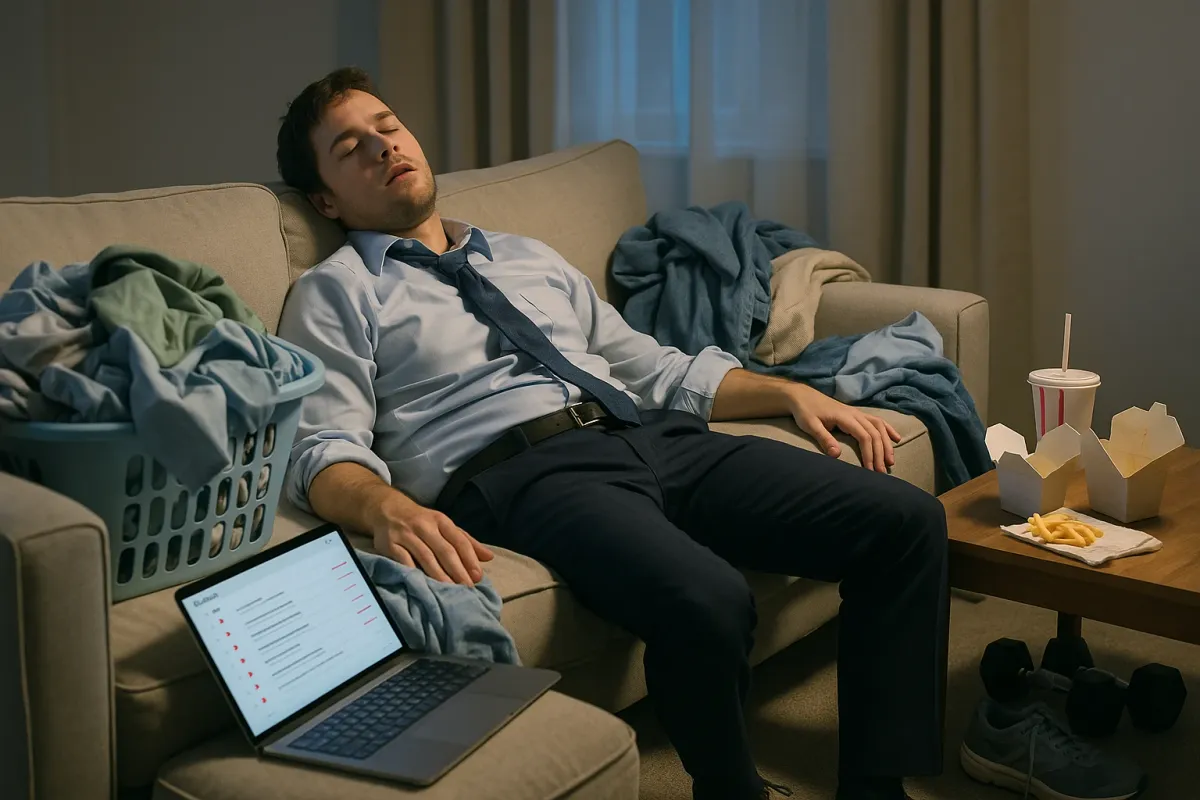
Modern life is starting to look like one long to‑do list. That’s exactly the tension captured in a trending Bored Panda piece about “grown‑up life” trapping people in a “never‑ending loop of adult responsibilities” and the need to reconnect with play, curiosity, and an “inner child.” While that article focuses on wholesome photos and emotional well‑being, the underlying theme is deeply physical too: when everything in your day feels urgent and serious, your body quietly pays the price.
Right now, we’re seeing record levels of burnout, desk‑bound work, and screen time, alongside booming interest in fitness “hacks,” micro‑workouts, and “movement snacks” on TikTok and Instagram. People are exhausted, overbooked, and still desperate to “get in shape.” The old model of willpower‑driven gym marathons simply doesn’t match how adults actually live in 2025.
The solution is not another extreme challenge; it’s rebuilding fitness into the grain of everyday life—often by borrowing from the very things adults feel they’re “too busy” or “too old” to do: play, short bursts of effort, and simple, repeatable habits. Below are five evidence‑based strategies to reclaim your body from the grind of adulthood—no magical thinking, just physiology, psychology, and practical structure.
1. Turn “Adult Chores” Into Training, Not Just Tasks
Most adults underestimate how much structured movement they can reclaim from things they’re already doing: cleaning, commuting, childcare, errands. Research on NEAT (non‑exercise activity thermogenesis) shows that the calories and metabolic benefits from non‑gym movement can rival formal workouts when accumulated across the day. In a landmark paper, Mayo Clinic researchers demonstrated that people with high NEAT levels (walking, standing, fidgeting, carrying) can burn hundreds more calories per day than their sedentary counterparts—even without “exercise.”
The key is to turn auto‑pilot chores into intentional physical work. Carry groceries instead of using a cart when feasible. Take stairs two at a time with good form, driving through the glutes. Walk or cycle short errands instead of automatically driving. When you’re cleaning, move briskly, squat to reach low surfaces instead of bending at the waist, and lunge while vacuuming. If you work from home—the reality for millions since the pandemic—use every transition (meeting ends, kettle boils, laundry cycle finishes) as a prompt for a two‑minute movement block: 10 squats, 10 push‑ups to a counter, 30 seconds of fast marching.
From a physiological standpoint, these micro‑efforts add up to more frequent muscle contractions, improved glucose uptake, better blood flow, and reduced stiffness—powerful counters to the metabolic drag of sitting all day. Psychologically, they also shift your identity: you’re no longer “too busy to work out”; you’re someone who trains through the day.
2. Bring Back Play: Why Adult Bodies Need “Recess” Too
The Bored Panda article’s call to “slow down, check in with your inner child, and reintroduce wonder, whimsy, and curiosity” is more than feel‑good sentiment; it’s good exercise science. Playful movement—games, sport, dancing, unstructured outdoor activity—engages multiple energy systems, recruits more muscle groups, and tends to last longer than rigid workouts because it’s intrinsically rewarding.
Studies on exercise adherence consistently show that enjoyment is one of the strongest predictors of long‑term consistency. A 2020 review in the journal Sports Medicine found that when physical activity is perceived as fun rather than duty, people stick with it significantly longer and report lower perceived exertion at the same workload. That means the same heart rate and muscular effort can feel easier when you’re actually enjoying yourself.
To operationalize “play” as an adult, think in formats, not nostalgia. You don’t have to join a competitive league tomorrow. Start with social and low‑barrier options: a weekly pickup basketball game, a casual run‑walk group, weekend hikes, or dance‑based fitness classes. Outdoor fitness trends—like “rucking” (walking with a weighted backpack), frisbee, or even adult “tag” groups that have gained traction in cities—are effective partly because they blend intervals of high effort with laughter and unpredictability.
From a training perspective, play tends to be intermittent and variable—similar to high‑intensity interval training (HIIT), which has strong evidence for improving cardiovascular fitness, insulin sensitivity, and VO₂ max in shorter total time. By reframing at least one weekly session as “recess” instead of “workout,” you tap into that science without the dread.
3. Use Micro‑Workouts to Outsmart Your Schedule (and Your Brain)
One reason so many adults fall into the “never‑ending loop” the viral article describes is all‑or‑nothing thinking: if you can’t do a perfect 60‑minute session, you might as well do nothing. Current research dismantles that idea. A growing body of evidence shows that multiple short “exercise snacks” across the day can deliver meaningful improvements in fitness and metabolic health.
For example, a study in Diabetologia found that three 10‑minute walking bouts after meals significantly improved blood sugar control compared to one 30‑minute walk—particularly relevant for office workers and anyone at risk of type 2 diabetes. Another trial published in Applied Physiology, Nutrition, and Metabolism showed that very short stair‑climbing intervals (3×20 seconds, with rest) performed several times per day improved cardiorespiratory fitness in previously inactive adults.
Practically, this means you can structure your day around 5–15‑minute windows:
- Morning: 8–10 minutes of bodyweight strength (squats, push‑ups, hip hinges, planks).
- Midday: 10–15‑minute brisk walk or stair intervals.
- Afternoon: 5 minutes of mobility (hip circles, thoracic rotations, hamstring stretches).
- Evening: Another 8–10 minutes focusing on a different strength pattern (rows with bands, lunges, glute bridges).
The neurobiology supports this approach too. Short bouts minimize psychological resistance—your brain is less likely to mount a “not today” campaign when the task is under 10 minutes. Over days and weeks, you accumulate meaningful training volume without ever needing to “find” a big block of time that may never materialize.
4. Anchor Fitness to Existing Habits So It Survives Stress
Real adult life is volatile: deadlines shift, kids get sick, news cycles are stressful, and pure willpower burns out fast. The people who maintain fitness long term do not rely on motivation alone; they design systems. One of the most robust behavior‑change frameworks in the literature is “habit stacking,” where you attach a new behavior to a well‑established one.
For example:
- After I brush my teeth in the morning, I do 10 slow squats.
- After I finish my first work call, I walk for 5 minutes.
- When I put the kettle on, I do 30 seconds of calf raises and 30 seconds of wall sits.
- After I put the kids to bed, I spend 8 minutes on yoga or stretching.
Research by BJ Fogg and others in behavioral science shows that small, clearly anchored actions are far more likely to become automatic, especially when the “required effort” is low and the identity payoff is high (“I’m someone who moves daily”). This is critical when life feels like that Bored Panda description—overloaded and routine‑heavy. You’re not adding more chaos; you’re embedding movement into rituals you already perform on autopilot.
From a physiological standpoint, consistency beats intensity. A 2022 study in Circulation confirmed that adults who met or exceeded physical activity guidelines—even distributed across the week in modest chunks—had substantially lower mortality risk than those who remained inactive. That benefit did not require elite workouts; it required regularity. Anchoring makes regularity more realistic.
5. Recover Like an Athlete, Even If You Don’t Train Like One
Adults often treat recovery as optional, something only “serious athletes” need to care about. In reality, recovery is where the adaptations you’re chasing—strength, endurance, fat loss, resilience—actually occur. Combined stress from work, family, and global uncertainty amplifies your need for deliberate rest.
Sleep is the foundation. Large meta‑analyses show that getting less than 7 hours per night is associated with poorer exercise performance, slower reaction times, higher perceived exertion, and impaired glucose metabolism. If your goal is to feel less tired and more capable, obsessing over the perfect workout while chronically short‑changing sleep is like trying to upgrade software on a dying battery.
Strategic rest days matter too. Research in Frontiers in Physiology highlights that alternating harder and easier training days improves performance and reduces injury risk. For time‑pressed adults, that can look like this:
- Higher‑effort days: Short interval training, moderate‑to‑heavy lifting, intense sports or classes.
- Lower‑effort days: Walking, easy cycling, yoga, mobility work, light play with kids or pets.
Finally, basic recovery hygiene—staying hydrated, prioritizing protein (especially in older adults to counter muscle loss), and doing 5–10 minutes of post‑workout low‑intensity movement instead of stopping abruptly—supports better circulation and muscle repair. These practices are grounded in sports science but are fully applicable to anyone who wants to show up clear‑headed and physically capable for the demands of adult life.
Conclusion
The viral conversation about adults being stuck in a “never‑ending loop of responsibilities” while craving a return to curiosity and play has a physical dimension we can’t ignore. Fitness in 2025 is no longer about escaping your life for an hour at the gym—it’s about redesigning the life you already have so your body is not an afterthought.
By turning chores into training, bringing back playful movement, leveraging micro‑workouts, anchoring habits to existing routines, and recovering with the same respect you give to work deadlines, you align your physiology with your reality. The goal isn’t to “grow up” out of movement; it’s to grow into a version of adulthood where your calendar, your responsibilities, and your body are on the same team.
Key Takeaway
The most important thing to remember from this article is that following these steps can lead to great results.