What you eat used to be between you, your kitchen, and maybe your doctor. Now your plate is a performance. From “What I eat in a day” clips to ultra-curated fridge tours, food has become one of the internet’s favorite genres. Viral posts, like the recent homeschool setup video that ignited a storm of opinions about parenting, show how quickly online content can morph from personal sharing into public judgment—and nutrition is no exception.
The same dynamics driving heated debates about homeschooling, “nepo babies,” or controversial professors are shaping how we think about food: quick takes go viral, nuance gets lost, and extreme opinions rise to the top. In an attention economy dominated by short-form video and hot takes, nutrition advice is often simplified, sensationalized, and stripped of context—which can quietly undermine your health.
This is your evidence-based guide to staying sane and healthy in a world where everyone online seems to have an opinion about your plate.
1. Recognize That Virality ≠ Validity
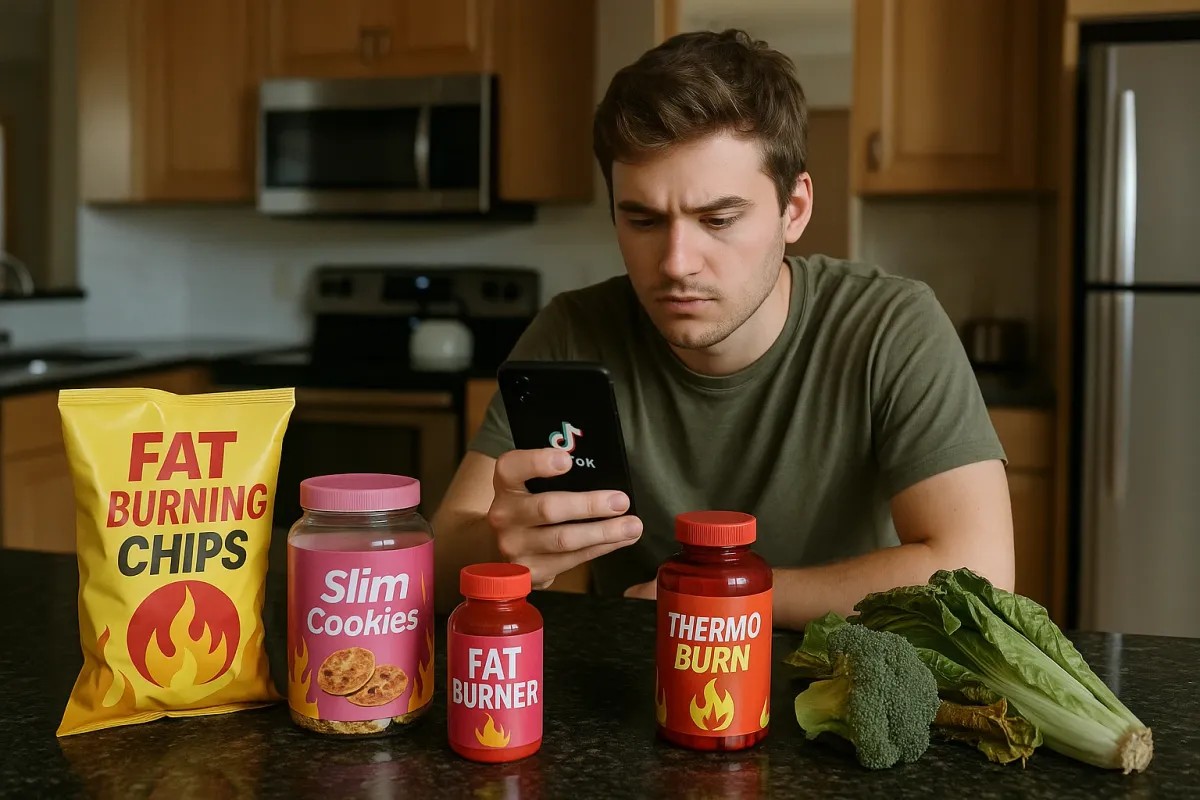
On platforms like TikTok, Instagram, and X, the posts that spread fastest are not the most accurate—they’re the most emotionally charged, novel, or relatable. The viral homeschool clip that stirred intense debate wasn’t about an education breakthrough; it went viral because it triggered strong feelings. Nutrition content works the same way.
Extreme claims—“seed oils are pure poison,” “carbs are killing you,” “fruit is just sugar”—spread because they’re simple, shocking, and easy to repeat. But nutrition science is rarely that absolute. Large cohort studies, randomized trials, and systematic reviews almost always show gradients of risk and benefit, not all-or-nothing truths.
Authoritative bodies like the World Health Organization (WHO), the U.S. Dietary Guidelines Advisory Committee, and the European Food Safety Authority (EFSA) base recommendations on the totality of evidence, often thousands of studies. Viral content, by contrast, frequently cherry-picks one provocative trial, a rodent study, or a single anecdote.
Evidence-based action step:
Before you change your diet based on a post:
- Ask: What’s the source? Is it a registered dietitian (RD/RDN), physician, or researcher—or just a charismatic influencer?
- Look for citations to peer-reviewed research or reputable institutions (NIH, WHO, major universities).
- Be suspicious of absolute language: “always,” “never,” “detox,” “miracle,” “superfood,” “toxic.”
- If it sounds too good—or too scary—to be true, it usually is.
2. Feed Your Body, Not the Algorithm: Build a Stable Eating Pattern
Short-form content rewards novelty: “I tried the 72-hour bone broth cleanse,” “I only ate cottage cheese for a week,” “No-sugar January changed everything.” That same novelty-seeking mindset is creeping into how people eat—constantly cycling through challenges, cleanses, and extreme experiments.
Yet nutrition science is clear: long-term patterns matter far more than short-lived stunts.
Large prospective studies like the Nurses’ Health Study and the EPIC cohorts consistently link stable, minimally processed, plant-forward dietary patterns—such as the Mediterranean and DASH diets—to lower risks of cardiovascular disease, type 2 diabetes, and all-cause mortality. These patterns are:
- Rich in vegetables, fruits, whole grains, legumes, nuts, and seeds
- Moderate in dairy, eggs, and fish
- Limited in processed meats, refined grains, and added sugars
Crash diets and rigid 30-day challenges often lead to rapid weight cycling (yo-yo dieting), which is associated with increased cardiometabolic risk, worse psychological well-being, and a higher likelihood of regaining more weight than was lost.
Evidence-based action step:
Instead of copying a daily menu from an influencer, anchor your week around consistent, research-backed habits:
- Include vegetables or fruit with every main meal.
- Choose whole grains (oats, brown rice, whole-wheat bread) as your default.
- Make most of your protein from plants (beans, lentils, tofu) plus fish, eggs, or lean meats as desired.
- Keep ultra-processed snacks, sugary drinks, and fast food as occasional—not daily—choices.
Your body thrives on boring consistency, even if the algorithm doesn’t.
3. Protect Your Relationship With Food in a Judgement-Heavy Online Culture
The viral homeschool clip that triggered intense scrutiny is part of a broader online pattern: public shaming of private choices. Nutrition content often follows the same script—people posting what they eat, and strangers lining up to critique, diagnose, or mock. That environment can quietly erode a healthy relationship with food.
Research in psychology and eating behavior shows that weight stigma, food shaming, and moralizing food (“good” vs. “bad”) are linked to:
- Increased binge eating and loss-of-control eating
- Higher levels of anxiety, guilt, and body dissatisfaction
- Avoidance of healthcare and nutrition counseling
- Greater long-term weight gain and metabolic risk
Meanwhile, approaches like Intuitive Eating and other non-restrictive, weight-neutral frameworks—supported by multiple observational and intervention studies—are linked with:
- Better psychological well-being
- Lower disordered eating behaviors
- More stable weight over time
- Improved dietary quality when combined with education
Evidence-based action step:
To protect your mental and physical health around food:
- Stop following accounts that make you feel ashamed, anxious, or “less than” about your eating or body.
- Avoid comment sections where people publicly dissect others’ bodies or meals.
- Practice neutral language: instead of “cheat meal” or “junk,” use “more nutritious” vs. “less nutritious.”
- If you notice obsessive tracking, fear of certain foods, or intense guilt after eating, consider speaking with a registered dietitian specializing in eating disorders, or a therapist experienced in disordered eating.
Food is not a moral test, and your value is not determined by your plate—or by strangers’ opinions on it.
4. Fact-Check Popular Nutrition Narratives Before You Share or Swipe
Just as heated arguments erupt over homeschooling, “canceled” professors, or controversial public figures, nutrition controversies often go viral with incomplete or misleading information. Seed oils, gluten, lectins, artificial sweeteners, and “toxic” ingredients are frequent targets. Some of the concerns have kernels of truth—but often lack real-world context.
A few examples where nuance matters:
- Seed oils (like soybean, canola, sunflower):
Observational data and randomized trials generally show that replacing saturated fats (butter, lard) with unsaturated fats (including many seed oils) lowers LDL cholesterol and cardiovascular risk. Some social media claims rely heavily on mechanistic arguments (e.g., oxidation, inflammation), but large population-level studies don’t support broad “seed oils are poison” narratives for the average person.
- Gluten for people without celiac disease or wheat allergy:
There’s little evidence that gluten is intrinsically harmful for most people. A subset may have non-celiac gluten sensitivity, but many individuals who feel better gluten-free may actually be reducing highly processed foods overall. Large cohort studies show whole-grain intake—much of which includes gluten—is associated with lower chronic disease risk.
- Artificial sweeteners:
Data are mixed and evolving. Some randomized trials show benefits for weight control when they replace sugar; some cohort studies link high intake with cardiometabolic risk, possibly confounded by reverse causation (people at higher risk choosing sweeteners). The WHO has advised caution with intense sweeteners for long-term weight control, but this doesn’t equate to “one diet soda will ruin your health.” Context and total diet still matter.
Evidence-based action step:
Before you internalize or repost a nutrition hot take:
- Look for systematic reviews and meta-analyses, not just single studies.
- Check organizations like the American Heart Association, Academy of Nutrition and Dietetics, or major public health bodies for summaries.
- Ask: Is this risk framed realistically? (e.g., relative vs. absolute risk, human vs. animal data, typical vs. extreme intake.)
If a claim needs fear or outrage to spread, it deserves closer scrutiny.
5. Design a Nutrition Plan That Fits Your Reality, Not Someone Else’s Aesthetic
Just as each family’s approach to homeschooling, work, and parenting is deeply individual, so is nutrition. Social feeds tend to showcase a narrow aesthetic: perfectly portioned meals, elaborate “meal prep Sundays,” or expensive organic hauls. That visual language can quietly imply that health is only accessible if your life looks like that.
In reality, evidence-based nutrition is flexible and can be adapted to many cultural, economic, and time constraints.
Key principles supported by global dietary guidelines and long-term epidemiological data:
- Total dietary pattern matters more than individual “superfoods.”
- Small, sustainable changes (like swapping sugary drinks for water most days or adding an extra serving of vegetables) have measurable impacts over time.
- Affordability and access are crucial. Canned, frozen, and dried options (beans, lentils, frozen vegetables, canned fish in water or olive oil) can be just as nutritious as fresh, often at lower cost.
- Cultural fit improves adherence. Traditional diets based on beans, grains, vegetables, and modest animal products are often aligned with modern health recommendations.
Evidence-based action step:
Build a realistic, personal plan by asking:
- What is my budget for food most weeks?
- How much time do I truly have to cook on weekdays vs. weekends?
- What foods do I genuinely enjoy, including cultural staples?
- What one or two changes would give me the biggest health return with the least disruption?
Examples of high-impact, research-backed adjustments:
- Move from sugary drinks to water or unsweetened tea most days.
- Replace processed meats (bacon, sausage, deli meats) with beans, lentils, eggs, or fish several times a week.
- Aim for at least half your grains as whole grains.
- Add nuts or seeds as a regular snack or meal add-on (unless contraindicated by allergies or specific medical conditions).
Healthy eating doesn’t need to photograph well to be effective.
Conclusion
The same forces that turn a homeschool setup, a college controversy, or a celebrity announcement into viral discourse are shaping the way we eat—and think about eating. In a landscape where virality often outruns validity, your best defense is a calm, evidence-based approach.
You don’t need a viral routine, a perfect pantry, or a camera-ready plate to nourish yourself well. You need:
- A stable, plant-forward eating pattern
- A protected, non-judgmental relationship with food
- A critical eye for nutrition claims that trade on fear or drama
- A plan grounded in your real life, not someone else’s highlight reel
In a world where everyone seems eager to judge someone else’s parenting, teaching, or lifestyle choices, treating your nutrition as a thoughtful, personal, and science-informed practice is quietly radical. And it’s one of the most powerful long-term investments you can make in your health—whether or not you ever post it online.
Key Takeaway
The most important thing to remember from this article is that this information can change how you think about Nutrition.