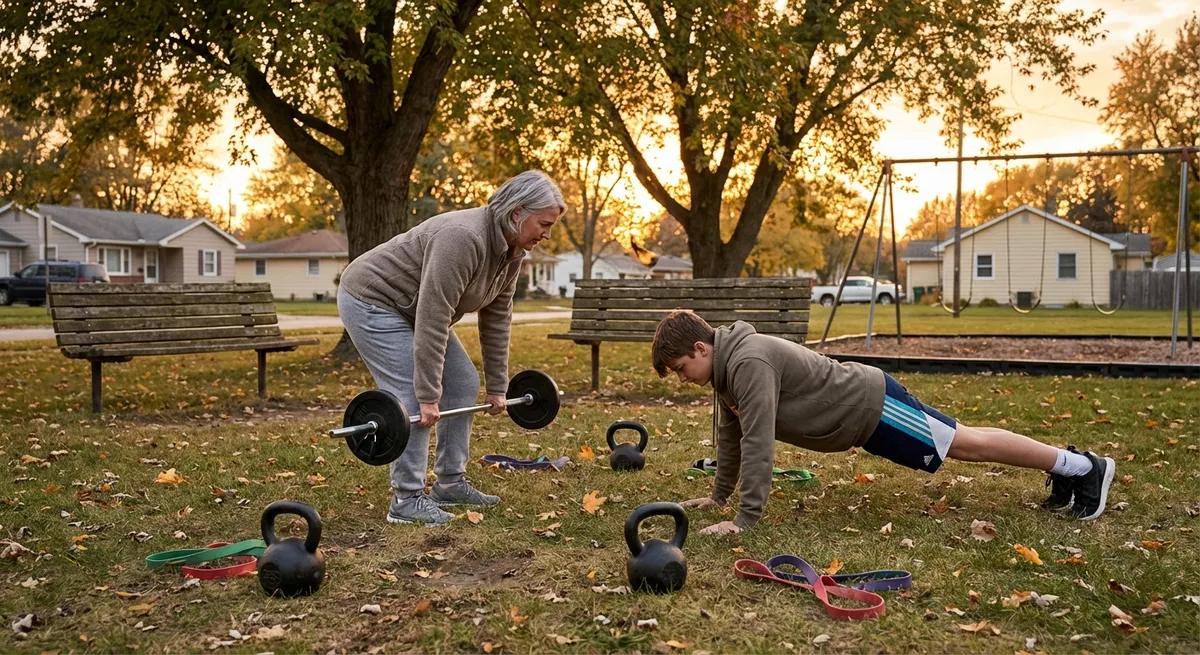
Fitness isn’t just about abs for summer or shaving seconds off your 5K. It’s about whether you can get off the floor easily at 70, carry groceries without thinking about it, and stay independent for as long as possible. Building a body that ages well requires a different mindset: less obsession with quick transformations, more focus on systems that protect your heart, brain, muscles, and joints over decades.
This guide breaks down five evidence-based fitness habits that meaningfully improve long-term health. Each tip is grounded in current research and designed to be realistic for a busy life.
Rethink “Cardio”: Train Your Heart Like an Organ, Not a Look
Cardio isn’t just about burning calories; it’s one of the most powerful tools you have to lower all-cause mortality, protect your brain, and reduce risk of chronic disease.
Regular aerobic exercise improves:
- Cardiovascular health: It strengthens the heart muscle, improves blood vessel function, and helps regulate blood pressure and cholesterol profiles.
- Metabolic health: It helps with blood sugar regulation and insulin sensitivity, reducing your risk of type 2 diabetes.
- Brain function: Aerobic training is associated with better cognitive performance and lower risk of dementia.
Authoritative guidelines (like those from the U.S. Department of Health and Human Services and the American Heart Association) converge on a similar target for adults:
- Minimum: About 150 minutes per week of moderate intensity (brisk walking, easy cycling, light jogging), or
- Alternative: About 75 minutes per week of vigorous intensity (running, fast cycling, high‑intensity classes), or
- Combination: A mix of both spread across the week.
To make this sustainable:
- Anchor most of your cardio around moderate intensity sessions you can have a conversation during.
- Add short bursts of higher intensity (like 20–60 seconds faster pace with equal or slightly longer recovery) 1–2 times per week if you’re cleared by a healthcare provider; this can improve fitness efficiently but is not mandatory to reap benefits.
- Focus on consistency over hero workouts. Three 30‑minute brisk walks plus one 20‑minute jog each week will do more for your long‑term health than a single all‑out Saturday run that sidelines you with soreness.
Think of cardio as routine maintenance for your circulatory and nervous systems. The aesthetic changes are a side effect, not the main outcome.
Make Strength Training Non‑Negotiable: Muscles Are Your Health “Reserve”
Muscle isn’t just about strength or appearance. It acts as a metabolic reservoir, supports joint health, stabilizes posture, and is strongly linked to longevity and reduced disability as you age.
Research shows that skeletal muscle mass and strength are independent predictors of mortality. Low muscle mass and poor grip strength are associated with higher risk of falls, hospitalizations, and earlier loss of independence.
Key principles for effective, evidence-based strength training:
- Frequency: Aim for at least 2 days per week of resistance training that targets all major muscle groups (legs, hips, back, abdomen, chest, shoulders, arms).
- Intensity: Choose a resistance (weights, resistance bands, machine, or bodyweight) that feels challenging by the last 2–3 repetitions of each set while still allowing you to maintain proper form.
- Volume: 1–3 sets of 8–12 repetitions per exercise is enough for most general health goals. Advanced trainees may do more, but “some” is vastly better than “none.”
- Progression: Gradually increase weight, reps, or sets over time as exercises become easier. This progressive overload is what drives adaptation.
Focus on movements that carry over into everyday life:
- Squats and hip hinges (sit‑to‑stand, deadlift variations) for getting up from chairs, stairs, and lifting objects.
- Pulls and pushes (rows, push‑ups, presses) for carrying, pushing doors, lifting items overhead.
- Core stability work (planks, side planks, anti‑rotation exercises) for spinal protection and balance.
You don’t need a gym membership to gain these benefits. Bodyweight exercises, resistance bands, and simple free weights at home can be enough. The critical factor is regular application of tension against resistance that meaningfully challenges your muscles.
Protect Your Joints and Balance: Train for the Movements You’ll Actually Need
Healthy aging depends not just on raw strength or conditioning but on how well you can control your body in space. Joint health, mobility, and balance are often neglected until there’s pain or a fall—but by then, you’re playing catch‑up.
Evidence consistently shows that balance and mobility training reduce falls and related injuries, particularly in older adults. The earlier you invest in these qualities, the more capacity you have “in reserve” later.
Core components to build into your weekly routine:
Joint-friendly mobility work
- Include 5–10 minutes of controlled, gentle movement for major joints (hips, ankles, shoulders, thoracic spine) most days. - Think: controlled leg swings, hip circles, ankle circles, cat‑camel, shoulder rotations. - The goal is comfortably available range of motion with control, not extreme flexibility.
Balance and stability training
- Simple single-leg stance (stand on one foot while holding onto a counter as needed) for 20–30 seconds each leg. Progress by reducing support or closing your eyes when safe. - Incorporate dynamic balance (e.g., walking heel‑to‑toe along a line, stepping over small obstacles, lateral stepping drills). - Yoga and tai chi have strong research backing for improving balance, coordination, and reducing fall risk.
Movement quality under load
- When you strength train, prioritize technique as highly as load. Controlled tempo, full but comfortable range of motion, and stable joint positions reduce injury risk and improve long‑term function.
Think of this as future-proofing your movement. It doesn’t need to be a separate 60‑minute “mobility session”—short doses integrated into warm-ups, cool-downs, or breaks during your day can be highly effective.
Recovery as a Training Variable: Sleep, Stress, and the Hidden Part of Progress
Most people focus on the workout itself and ignore the fact that adaptation happens during recovery, not during the session. Without adequate recovery, you blunt gains from both cardio and strength work, increase injury risk, and worsen overall health markers.
Two pillars have more evidence behind them than any supplement or gadget:
1. Sleep as a performance and health multiplier
Sleep is directly linked to:
- Muscle repair and growth (via hormones like growth hormone and testosterone).
- Glucose metabolism and insulin sensitivity.
- Appetite regulation (poor sleep increases ghrelin and decreases leptin, driving cravings).
- Cognitive function, mood, and reaction time (critical for coordination and injury prevention).
Most adults need 7–9 hours of quality sleep per night. To support this:
- Keep a consistent sleep and wake time, even on weekends.
- Limit bright screens and intense work in the hour before bed.
- Use your workout timing strategically: vigorous exercise is best done earlier in the day if late‑night sessions disrupt your sleep.
2. Stress management as joint protection and injury prevention
Chronic stress can increase muscle tension, affect movement patterns, and alter pain perception. It’s also associated with higher inflammation and slower recovery.
Practical, evidence-informed approaches:
- Low‑intensity movement (walks, gentle cycling, stretching, yoga) can serve as active recovery and stress regulation.
- Keeping at least one full rest day from intense training each week supports long-term adherence and reduces burnout.
- Pay attention to signs of under‑recovery: persistent fatigue, unusual irritability, declining performance, or frequent minor injuries. Scale back when needed.
Treat sleep and stress management as non‑negotiable components of your training program, not optional bonuses.
Make Fitness Habits Stick: Design an Environment That Does the Heavy Lifting
Even the best plan fails if it doesn’t fit your real life. The research on behavior change emphasizes that environment and structure often matter more than willpower.
To make your fitness habits sustainable:
Anchor workouts to existing routines
- Pair your session with a stable daily cue: right after morning coffee, immediately after work, or following school drop‑off. - Consistent timing reduces decision fatigue and turns training into “what you do,” not “what you have to negotiate with yourself about.”
Lower the friction to starting
- Keep your workout gear visible and ready: shoes by the door, dumbbells in the living room, resistance bands at your desk. - Choose default workouts that can be done in 20–30 minutes with no commute and minimal setup. You can always extend when time allows.
Set process goals, not just outcome goals
- Outcome: “Lose 10 pounds” or “run a 10K.” - Process: “Walk briskly for 25 minutes 4 times this week,” “strength train Monday and Thursday.” - Process goals are fully under your control and align better with long-term adherence.
Track the metrics that matter for healthspan
- How many stairs can you climb without getting winded? - How easily can you get up from the floor without using your hands? - Are your lifts progressing gradually over months? - Are you sleeping better, recovering faster, and feeling more capable?
Social accountability also helps:
- Commit to workouts with a friend, or check in weekly by text.
- Consider evidence-based group classes (like strength circuits, yoga, or walking groups) if you thrive with community support.
By treating your environment, schedule, and social context as tools—not obstacles—you transform fitness from a short-term project into a long-term lifestyle backbone.
Conclusion
A body that ages well isn’t built through short bursts of extreme discipline. It’s the result of sustainable systems: regular aerobic work that protects your heart and brain, consistent strength training that preserves muscle and independence, mobility and balance work that keeps you moving freely, recovery habits that allow adaptation, and a life setup that makes showing up easier than skipping.
You don’t need perfection or elaborate routines. You need repeatable, evidence-based practices you can maintain through busy seasons, stress, and change. Start where you are, choose one or two of these pillars to solidify, and build outward. Your future self—stronger, steadier, and more capable—depends on what you put in place now.
Sources
- [Physical Activity Guidelines for Americans, 2nd edition – U.S. Department of Health and Human Services](https://health.gov/sites/default/files/2019-09/Physical_Activity_Guidelines_2nd_edition.pdf) - Comprehensive federal guidelines on recommended amounts and types of physical activity for health
- [Physical Activity and Health: A Report of the Surgeon General – CDC](https://www.cdc.gov/nccdphp/sgr/index.htm) - Overview of the health benefits of regular physical activity and its impact on chronic disease risk
- [ACSM’s Position Stand: Quantity and Quality of Exercise for Developing and Maintaining Cardiorespiratory, Musculoskeletal, and Neuromotor Fitness in Apparently Healthy Adults](https://journals.lww.com/acsm-msse/Fulltext/2011/07000/Quantity_and_Quality_of_Exercise_for_Developing.26.aspx) - Evidence-based recommendations for exercise prescription across fitness domains
- [American Heart Association: Recommendations for Physical Activity in Adults](https://www.heart.org/en/healthy-living/fitness/fitness-basics/aha-recs-for-physical-activity-in-adults) - Practical guidelines for aerobic and muscle-strengthening exercise to support cardiovascular health
- [Sleep and Athletic Performance – Stanford University Sleep Center](https://stanfordhealthcare.org/medical-conditions/sleep/center-for-human-sleep-research/sleep-and-athletic-performance.html) - Review of how sleep duration and quality influence physical performance, recovery, and overall health
Key Takeaway
The most important thing to remember from this article is that following these steps can lead to great results.